
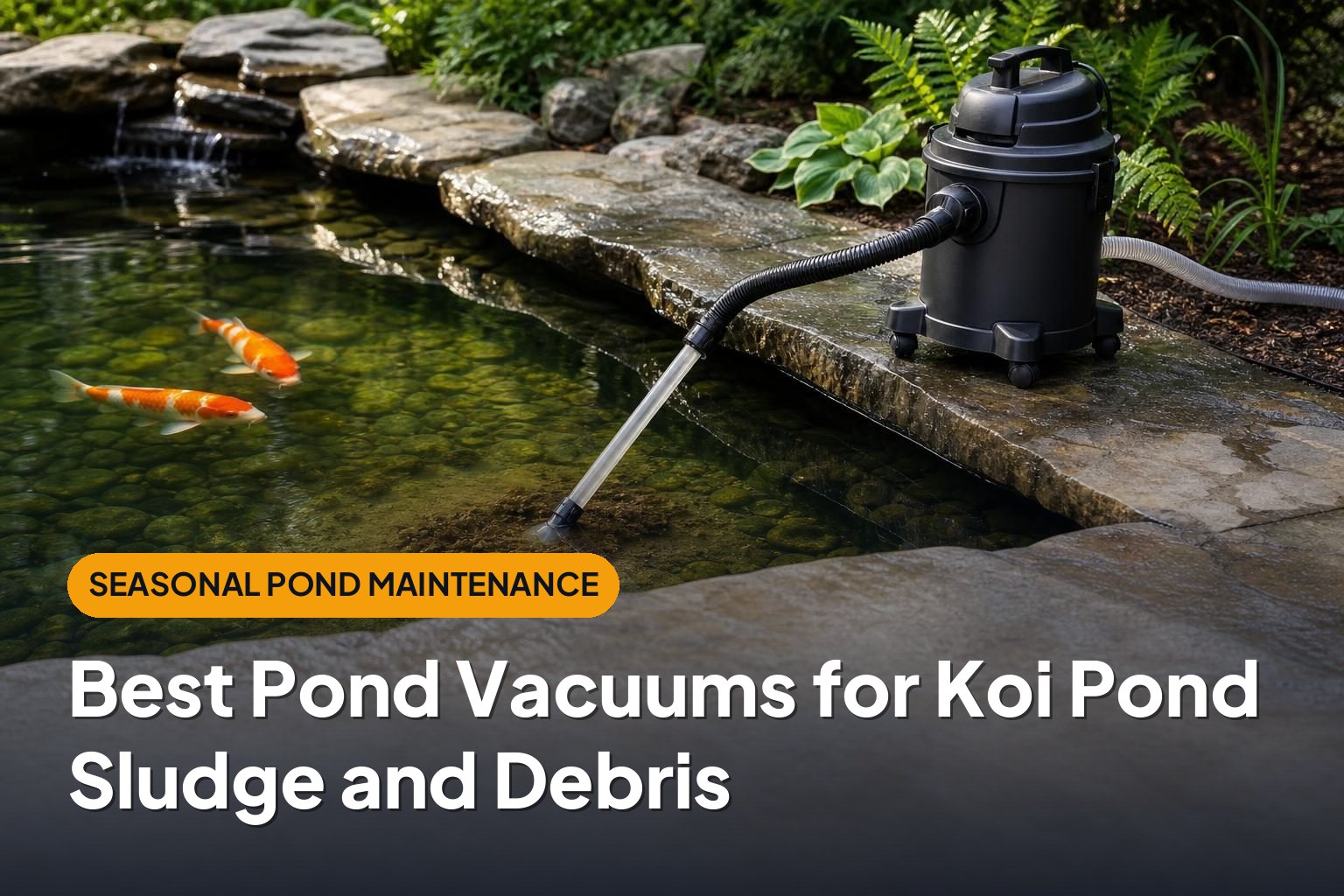
The best pond vacuum for koi pond maintenance should remove settled sludge without turning every cleanup into a major water change. These quick picks cover light seasonal tidying, regular bottom cleaning, and heavier debris removal. The right choice depends on pond depth, access, and where the dirty water needs to go.
- Best for small ponds and occasional cleaning: OASE PondoVac Classic. A straightforward electric vacuum for owners who can work around stop-and-drain cycles.
- Best step up from a basic vacuum: OASE PondoVac 3. Its dual-chamber system reduces interruptions during routine cleaning.
- Best all-round choice for regular maintenance: OASE PondoVac 4. A capable option for established koi ponds where cleaning is a recurring job.
- Best for flexible wastewater disposal: OASE PondoVac 5. A discharge pump makes it especially useful when gravity drainage is inconvenient.
- Best hose-powered alternative: Python Ulti-Vac. A non-electric option for lighter cleaning where a suitable garden-hose connection is available.
1. OASE PondoVac Classic: Best for Small Ponds and Occasional Cleaning
The OASE PondoVac Classic is a sensible starting point for smaller koi ponds, accessible shelves, and occasional seasonal sludge removal. It uses a collection chamber that fills during suction, then empties before cleaning resumes.
That interrupted workflow is its main compromise. For a modest pond with manageable debris, however, pauses may matter less than having a relatively straightforward machine to store and operate.
Strengths
- Suitable for targeted cleanup: Useful for removing settled waste from specific areas rather than disturbing the whole pond.
- Simple operating approach: A practical introduction to electric pond vacuuming.
- Good fit for occasional maintenance: Worth considering when sludge removal is a seasonal task rather than a frequent chore.
Drawbacks
- The fill-and-drain cycle interrupts suction.
- Heavy sludge accumulation can make the stop-start process tedious.
- Discharge-hose placement matters because emptying depends on suitable drainage conditions.
Choose it if: Your pond is relatively small, the bottom is easy to reach, and you do not mind working in short cleaning sessions.
2. OASE PondoVac 3: Best Step Up from a Basic Vacuum
The OASE PondoVac 3 moves to a dual-chamber design. One chamber can discharge while the other collects water, reducing the interruptions associated with a single-chamber vacuum.
For koi keepers who clean several times during the growing season, that difference can make routine maintenance more convenient. It is particularly relevant when there are multiple shelves or bottom areas to work through.
Strengths
- Fewer emptying interruptions: Alternating chambers support a more continuous cleaning process.
- Useful middle-ground design: Suits owners who want more convenience than an entry-level vacuum provides.
- Better workflow for sectional cleaning: Helps when moving methodically around an established pond.
Drawbacks
- Dual chambers do not eliminate restrictions caused by poor discharge routing.
- Bulky leaves and string algae can still obstruct the nozzle or hose.
- Actual cleaning performance depends on operating depth and hose arrangement.
Choose it if: Stop-start emptying is your main frustration, but you do not need a model with a dedicated wastewater discharge pump.
3. OASE PondoVac 4: Best All-Round Choice for Regular Maintenance
The OASE PondoVac 4 is a strong shortlist candidate for koi owners who expect to vacuum regularly. Like the PondoVac 3, it uses a dual-chamber arrangement to reduce pauses during cleaning.
It occupies a useful position between a basic seasonal-cleaning machine and the more specialized discharge setup of the PondoVac 5. For many owners, the decision comes down to reach, included accessories, and drainage conditions rather than simply choosing the largest model.
Strengths
- Convenient for recurring jobs: The dual-chamber design suits regular sludge removal.
- Adaptable cleaning: Different nozzle types help address open bottom areas, edges, and localized debris.
- Good match for established ponds: Worth considering when fish waste and windblown debris accumulate throughout the season.
Drawbacks
- It is a bulkier purchase to store than a simple hose-powered cleaner.
- Gravity-based discharge still requires careful outlet positioning.
- More capability does not remove the need to net out large debris first.
Choose it if: You want a practical all-round electric vacuum for ongoing koi pond maintenance and have an appropriate place for wastewater to drain.
4. OASE PondoVac 5: Best for Flexible Wastewater Disposal

The OASE PondoVac 5 stands out because it incorporates a discharge pump. That makes it especially relevant when the dirty water cannot conveniently drain away by gravity.
Raised pond edges, awkward garden layouts, and distant disposal areas can complicate vacuuming. A pumped discharge system offers more routing flexibility, although it still has operating limits that must be checked before purchase.
Strengths
- More flexible discharge routing: The wastewater pump reduces dependence on a conveniently positioned downhill outlet.
- Useful for awkward sites: A strong candidate where drainage layout is the main obstacle.
- Suited to regular, substantial cleaning: Worth considering when setup convenience has a major effect on whether maintenance gets done.
Drawbacks
- It is a substantial machine to move, clean, and store.
- The discharge pump adds another component that needs attention after use.
- Pumping distance and elevation remain limited; check the manufacturer’s specifications for your intended route.
Choose it if: Wastewater disposal is the difficult part of cleaning your pond. Its discharge system is a more meaningful reason to upgrade than assuming a bigger vacuum is automatically better.
5. Python Ulti-Vac: Best Hose-Powered Alternative
The Python Ulti-Vac uses garden-hose water pressure to create suction rather than relying on an electric vacuum motor. It offers a different approach for owners handling lighter deposits or targeted cleanup.
Its suitability depends heavily on the available water supply and the cleaning setup. It is not the first choice for a deep pond with a thick layer of compacted sludge.
Strengths
- No electric vacuum motor: Useful when you prefer a hose-powered cleaning method.
- Suitable for spot cleaning: Can make sense for accessible areas with modest debris accumulation.
- Alternative to a canister machine: Worth considering when you do not want another large powered appliance.
Drawbacks
- Performance depends on garden-hose pressure and the installation arrangement.
- It consumes supply water while operating.
- It is less appropriate for demanding deep-bottom sludge removal.
Choose it if: You have suitable water pressure and mainly need light-duty cleaning. Follow the installation instructions carefully, and account for any untreated tap water that could reach the pond.
Buying Guide: What to Look for in a Koi Pond Vacuum
Match Suction Depth to Your Pond
Check the manufacturer’s maximum working depth, not just the length of the supplied pole. A nozzle that physically reaches the bottom may still perform poorly near the machine’s suction limit.
Consider where the vacuum will stand, too. A raised pond wall or elevated equipment position can increase the lift required.
Choose the Right Emptying System
- Single chamber: Suitable for occasional cleaning when pauses are acceptable.
- Dual chamber: Better for reducing interruptions during longer sessions.
- Pumped discharge: Most useful when gravity drainage is impractical.
Several picks here come from the same product family because these operating differences offer clear choices for different pond layouts. Compare the actual specifications and included accessories rather than relying on model names alone.
Plan Where the Wastewater Will Go
Check discharge-hose length, permitted elevation, and local disposal requirements. Keep dirty water from flowing back into the pond, onto neighboring property, or into storm drains.
Remember that vacuuming usually removes pond water along with sludge. Monitor the water level and replace losses with appropriately conditioned water, avoiding abrupt temperature or chemistry changes.
Look for Fish-Safe, Liner-Friendly Cleaning
Choose a nozzle suited to your pond surface and keep it away from koi, especially small fish. Never leave an operating suction nozzle unattended in the water.
For gravel-bottom ponds, check whether the nozzle can separate debris from the substrate. Loose stones can block equipment, and deep gravel deposits may require a different maintenance approach.
Make Seasonal Cleaning Manageable
Net out leaves and bulky string algae before vacuuming. Then clean in sections, targeting accumulated waste rather than trying to sterilize every surface. Healthy biofilm is not the same thing as loose sludge.
During warm weather, maintain good aeration and avoid stirring up large deposits at once. If koi show distress, stop and check water conditions. Strong rotten-egg odors from disturbed sludge are a reason to pause and reassess the cleanup.
Conclusion
The best pond vacuum for koi pond care is the one that fits both your pond and your drainage setup. Consider the PondoVac Classic for occasional small jobs, the PondoVac 3 or 4 for regular cleaning, and the PondoVac 5 when wastewater routing is difficult. The Python Ulti-Vac offers a hose-powered alternative for lighter work. Whichever you choose, frequent targeted cleaning is generally easier to manage than allowing a heavy sludge layer to build up.